European Wasps and Paper Wasps on the Central Coast: Spring Nest Removal and Safety
Every spring the calls start. A wasp has been going in and out of a hole in the lawn. There is a grey papery lump under the eaves. The kids have been told to stay away from the back corner of the yard. If that sounds familiar, you are not alone. Wasp activity picks up across the Central Coast from September as the weather warms, and by December some nests are surprisingly large.
Two wasps, two very different problems
European wasps are about the size of a bee, with bold yellow and black bands and black spots on the yellow. They are aggressive when their nest is disturbed, and they can sting repeatedly. Their nests are often hidden: in wall cavities, roof voids, sub-floors, hollow logs or in the ground. A single hole in the lawn with a steady stream of wasps is a classic sign. Nests can grow to thousands of workers, and in our mild climate they sometimes survive through winter and keep growing.
Paper wasps are longer, slimmer and have dangling legs in flight. They build the open, umbrella-shaped comb you often see under eaves, in patio beams, letterboxes, shrubs and BBQ covers. They are less aggressive than European wasps and usually leave you alone unless you get close, but a nest beside a front door or a clothesline is still a problem for anyone who is allergic or has small children.
How to tell if you have a nest
Watch the flight path. Wasps travelling in a straight line to the same spot, again and again, are heading home. Listen at wall cavities and roof voids for a faint buzzing or scratching. Look for small holes in lawns and garden beds, and for chewed plasterboard or damp patches on ceilings where wasps have been working. In the garden, an unusual number of wasps around pet food, rubbish bins and fallen fruit is another clue, because European wasps love sugar and protein.
Why you should not DIY it
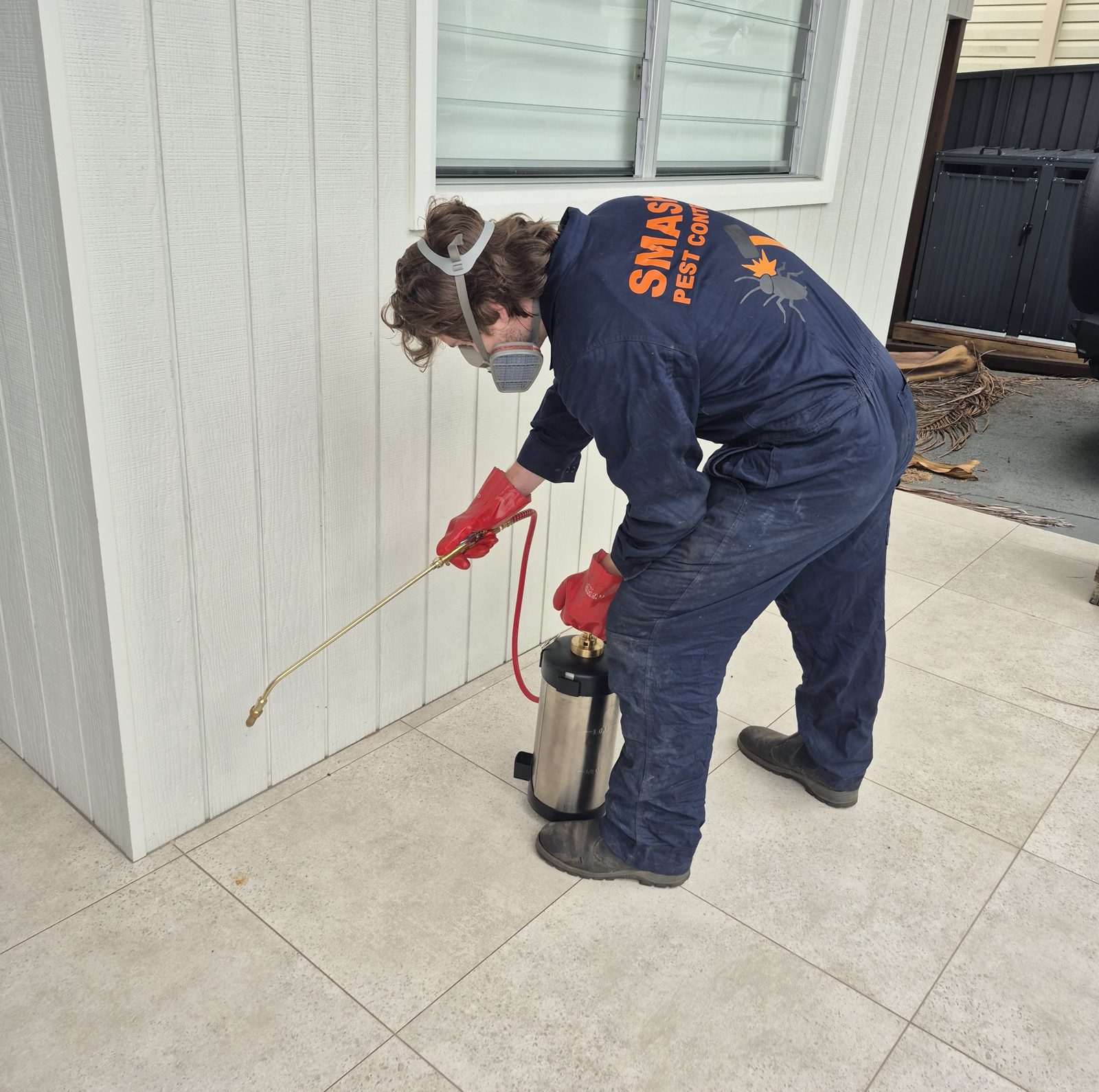
Every year people get badly stung trying to deal with nests themselves. Spraying the visible entrance and walking away does not kill the colony, and it can make the wasps more defensive. Pouring petrol into a hole is dangerous and illegal to dispose of that way. Blocking an entrance can push wasps into the house through a light fitting or a gap in the wall. Treatment works best with the right professional dust or spray applied to the nest itself, with the right protective gear, usually at dusk or early morning when the wasps are at home and calm.
Safety until we arrive
Keep children and pets away from the area. Do not swat at wasps or spray them with a hose. Cover bins and clear pet food. Keep windows near the nest closed. If someone is stung and develops swelling of the face or throat, trouble breathing, dizziness or hives, call 000 straight away. A sting in the mouth or throat also needs urgent medical attention.
What we do
We find the nest, identify the wasp, and treat the colony directly. For ground nests that usually means treating the entrance and the nest chamber. For roof voids and wall cavities we treat from the access point and check back to make sure activity has stopped. Paper wasp nests under eaves are removed after treatment. Wasp work sits alongside our general pest control service, and we cover Gosford, Terrigal, Wyong, The Entrance, Woy Woy and the suburbs around them. If you are not sure what you have, our pest identification guide can help, and our seasonal pest calendar shows what else to expect through the year.
Preventing next year's nest
Seal gaps in eaves, vents and wall cavities. Keep rubbish bins lidded, pick up fallen fruit and do not leave pet food out. Check sheds, under decks and the backs of garden beds every couple of weeks in spring. Catching a small, early nest is much easier than dealing with a full colony in January.
Frequently asked questions
Will a wasp nest go away by itself? Paper wasp nests die off in the cooler months, but wasps return and rebuild nearby. European wasp nests can survive and grow, so treat them.
Are wasps and bees the same? No. Bees are important pollinators and should be left to a beekeeper. If you are unsure which you have, call us before treating anything.
Is it safe to stay home during treatment? Usually yes, but we will tell you which areas to avoid and for how long.
How quickly can you attend? Wasp calls get priority in spring. Call and we will tell you the earliest we can get there.
Found a wasp nest? Call Dylan at Smash Pest Control on 0447 088 762.
Comments