Mice vs Rats in Central Coast Homes: How to Tell and What to Do

Short answer: if the droppings are about the size of a grain of rice and you hear light scratching in the walls, it is most likely mice. If you find larger, capsule-shaped droppings, greasy rub marks along the walls, gnawed timber, or heavy thumping in the ceiling at night, you are probably dealing with rats. On the Central Coast, rats are usually in the roof void while house mice move into kitchens, cupboards and wall cavities. The difference matters, because the right treatment is not the same for both.
How to tell mice from rats
Droppings are the easiest clue. Mouse droppings are small, with pointed ends, and tend to be scattered widely. Rat droppings are larger, around 1 to 2 cm long, thicker and capsule-shaped, and are often found in clusters along regular runs. Fresh droppings are dark and moist, while old ones are grey and crumble.
Noise is next. Mice make light, quick scratching and scurrying, often in wall cavities or behind kitchen cupboards. Rats are heavier. People describe thumping, dragging or galloping sounds in the ceiling, mostly between dusk and midnight. Both are nocturnal, so you will usually hear them long before you see them.
Damage tells you a lot as well. Mice nibble small, neat holes in cereal boxes, bread bags and soap, and can squeeze through a gap about as wide as a pencil. Rats gnaw larger holes in timber, plastic and pipe lagging, and they can chew electrical cable, which is a genuine fire risk. Greasy rub marks along skirting boards and walls point to rats, which follow the same path every night.
Why Central Coast homes get them
The Central Coast has everything rodents want: bushland and creek corridors, fruit trees, backyard chook pens, compost bins and a mild climate. Rats climb well, so they travel along fences, palm trees and power lines and enter through eaves, vents and gaps around roof penetrations. House mice are happy living inside, in pantries, wall cavities and behind appliances. Older homes with damaged sub-floor vents or gaps around pipes make it easy, but newer estates backing onto bush in suburbs like Terrigal, Kincumber and Wamberal see plenty of activity too.
Activity usually peaks in autumn and winter, when rodents move indoors for warmth and food, as covered in our seasonal pest calendar, but we get calls all year round. Our earlier guide to rats and mice on the Central Coast covers the seasonal signs in more detail.
Where to look inside and outside the house
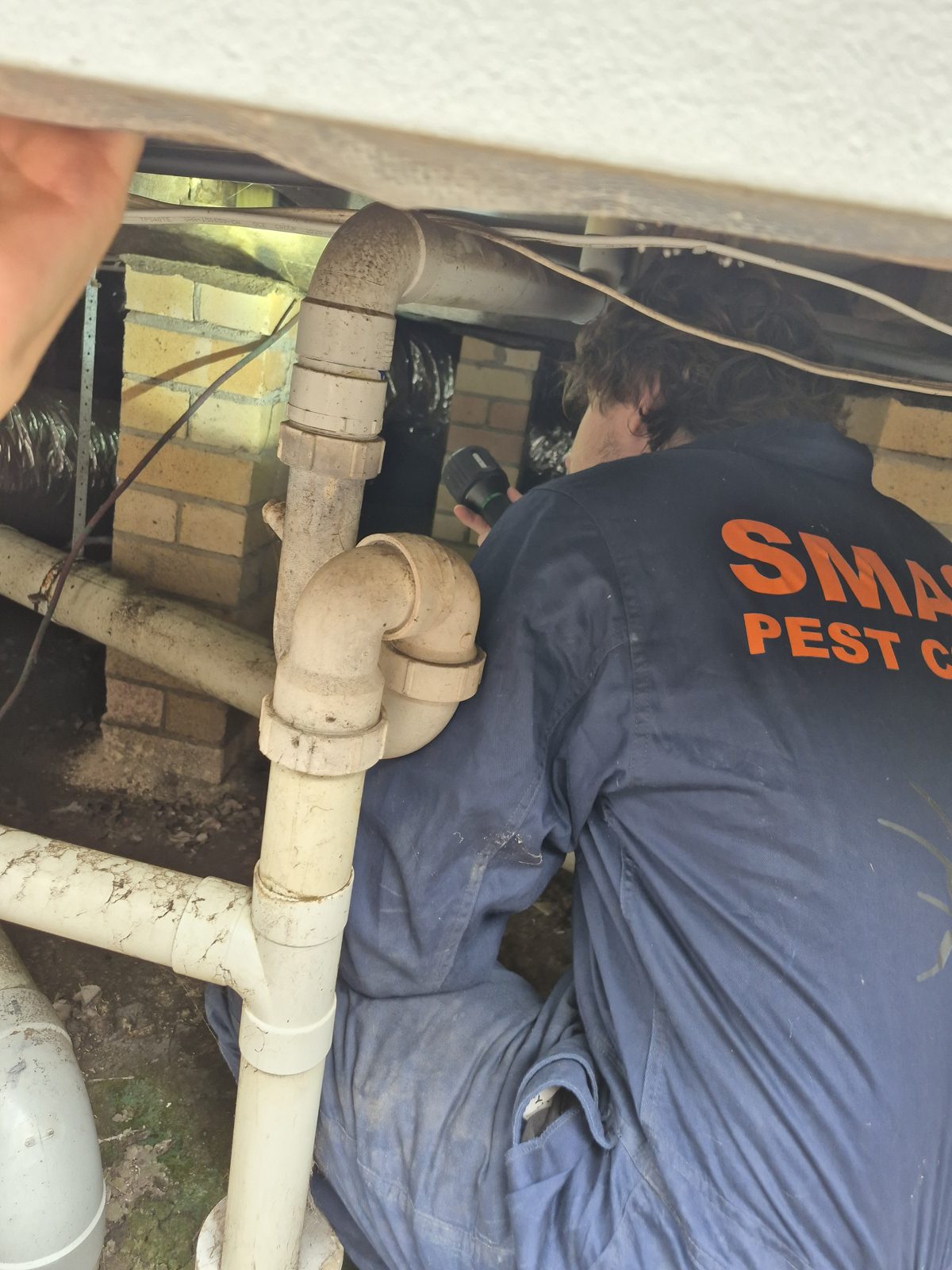
Check the roof void first, because that is where rats usually nest. Look for droppings, flattened insulation, chewed wiring and nesting material. Then check the kitchen: behind the fridge and stove, inside the pantry and under the sink. Mice often leave droppings in drawers and along the back of cupboards. In the garage and shed, look at stored boxes, pet food and bird seed. Outside, look for burrows near foundations, gaps under decks, rub marks along fence lines and fruit that has been gnawed in the trees.
What to do first, and what not to do
Start by cutting off food, water and shelter. Store pet food, bird seed and pantry items in sealed containers, keep bins lidded, pick up fallen fruit and tidy woodpiles, clutter and long grass near the house. Trim branches that touch the roof and fix dripping taps and leaks.
Do not block holes before treatment. A rodent sealed inside a wall may die somewhere you cannot reach, and the smell can last for weeks. When you clean up droppings, wear gloves and a mask, dampen the area with disinfectant rather than sweeping it dry, and wash your hands afterwards. Droppings and urine can carry bacteria that cause illness. Keep pets and children away from any baits and traps.
Why DIY often fails
Mice and rats behave differently, so the same trap or bait rarely works for both. Mice are curious and will investigate new objects. Rats are cautious and may avoid a new trap or bait station for days. Placing products without knowing where the animals are getting in means you are guessing, and meanwhile the colony keeps breeding. Loose poison in a roof void also puts pets and native wildlife such as owls at risk, and can leave dead animals in places nobody can reach.
How we treat mice and rats
At Smash Pest Control we start by working out what you have and where it is getting in. We inspect for entry points and activity, then set up a baiting and trapping program that suits the species and the property, and we tell you which gaps need sealing so the problem does not return. You can read more on our rodent control page. A mouse in the pantry and a rat colony in the roof are very different jobs, and we will tell you honestly which one you have and what to expect. For the wider range of pests we treat, see our general pest control service.
Frequently asked questions
How can I tell if it is mice or rats? Check the droppings. Rice-grain sized and scattered means mice. Larger, capsule-shaped and clustered means rats. Heavy thumping in the ceiling also points to rats.
Are mice or rats more dangerous? Both can spread bacteria and contaminate food. Rats can also cause serious damage by gnawing wiring and timber, so they are usually the bigger risk to the building.
Will rodents leave on their own? Rarely. If they have food, water and shelter they stay and breed, so waiting usually makes the problem bigger.
Is rodent treatment safe around pets and kids? We place baits and traps in secure locations and explain which areas to keep clear. Tell us about pets and children when you call.
How quickly can you attend? Call and we will tell you the earliest we can get there.
Hearing scratching or finding droppings? Call Dylan at Smash Pest Control on 0447 088 762, or contact us online.
Comments